A mixed reality experience that memorializes Pittsburgh's historic Chinatown — bringing a century of forgotten history back to life through browser-based augmented reality.
My role — Experience Designer. I shaped the narrative, interactions, and emotional arc of the 8–10 minute experience; led the in-experience UI; ran user tests with tourists, immigrants, and students; and worked with historians to keep the recreated world accurate.
Pittsburgh's Chinatown once thrived in the heart of downtown — a vibrant community of immigrants, merchants, and families. By the 1960s, urban redevelopment had erased nearly every trace of it. Today, most Pittsburghers don't know it ever existed.
AR Mixtory is a mixed reality experience that brings this forgotten history back to life. Built on Carnegie Mellon's ARENA platform, it lets users walk through a recreated 1890s Chinatown, interact with historical characters, and uncover the story of a community that shaped the city.
The experience is fully browser-based — no app downloads, no headsets required. Just open a link and step into history.
Visit Project Website ↗Build a location-based mixed reality experience on ARENA that both showcases the platform's capabilities and creates genuine emotional engagement with a forgotten neighborhood — designed for school-district students ages 6–15.
The core challenge wasn't technical — it was emotional. Passive observation wouldn't be enough. We needed users to feel like participants, not spectators.
Target audiences reported feeling a genuine emotional connection to the historical characters — validating our agency-driven storytelling approach.
Unpacked the client's dual goal — showcase ARENA's capabilities and preserve Pittsburgh's lost Chinatown.
Historical research, ARENA onboarding, persona development, and a scan of comparable MR experiences.
Story structure and interaction design; first playable with a basic environment and character beats.
3D environments from Smithsonian assets and photogrammetry, ElevenLabs narration, multi-user support.
User testing with target audiences, visual polish, performance optimization, and the ETC Festival demo.
A neighborhood that no longer exists can't be designed from assumptions. Before any interaction was sketched, we rebuilt Chinatown from two primary sources — the people who remembered it, and the records that documented it.
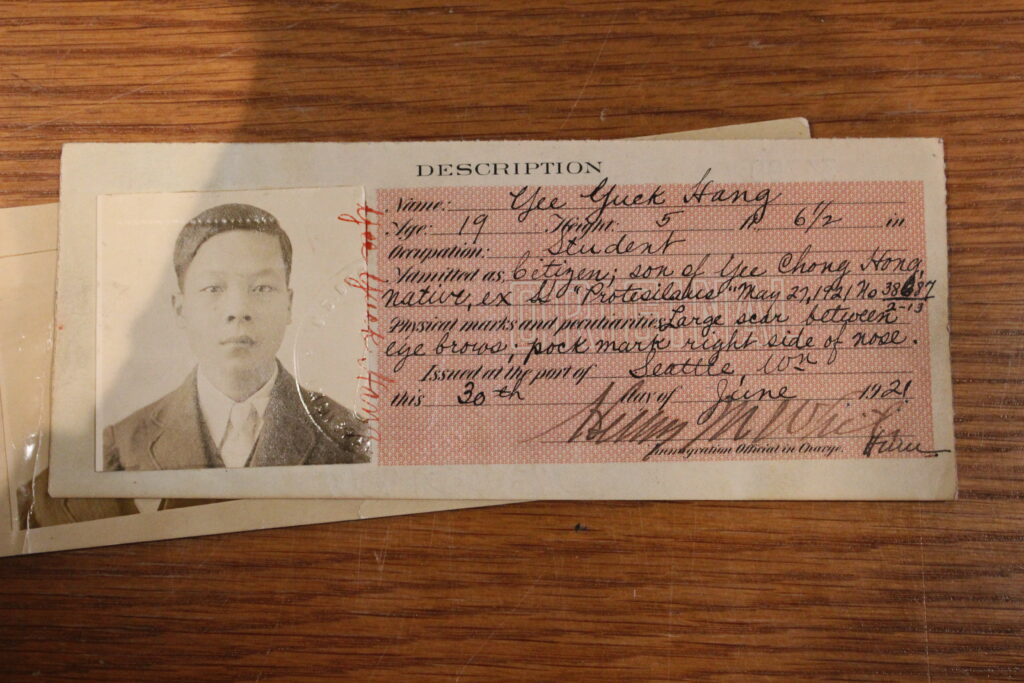
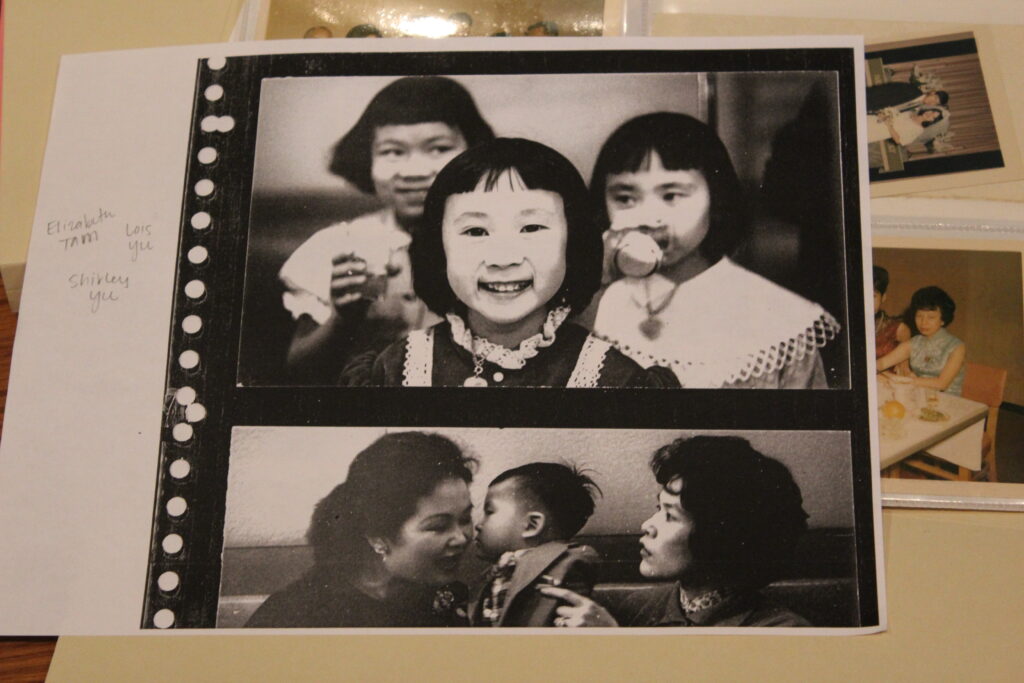
We interviewed Shirley Yee — a Carnegie Mellon professor and daughter of Yuen Yee, the last informal mayor of Pittsburgh's Chinatown — for first-hand accounts of the community and access to her family's photo collection.
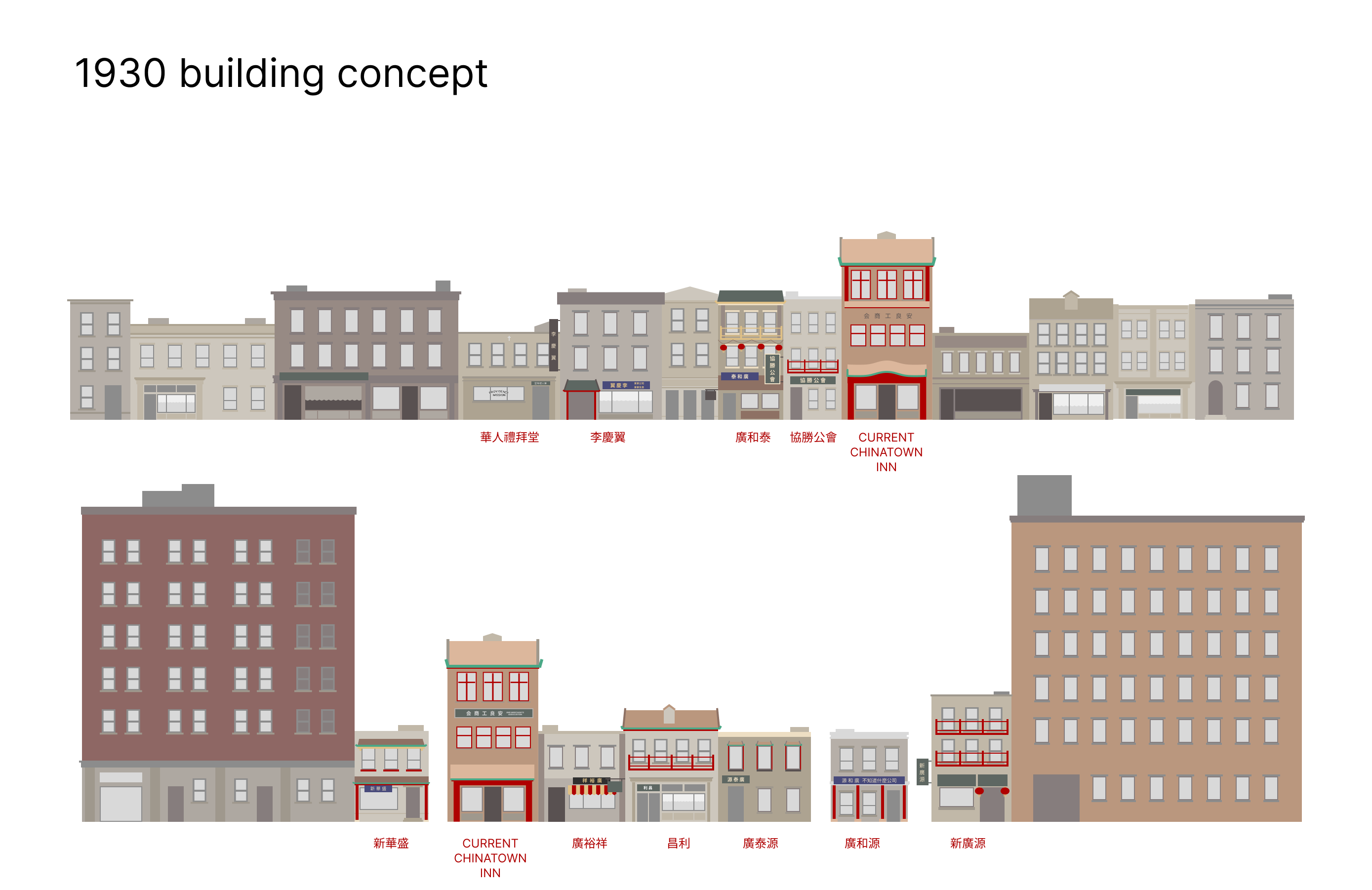
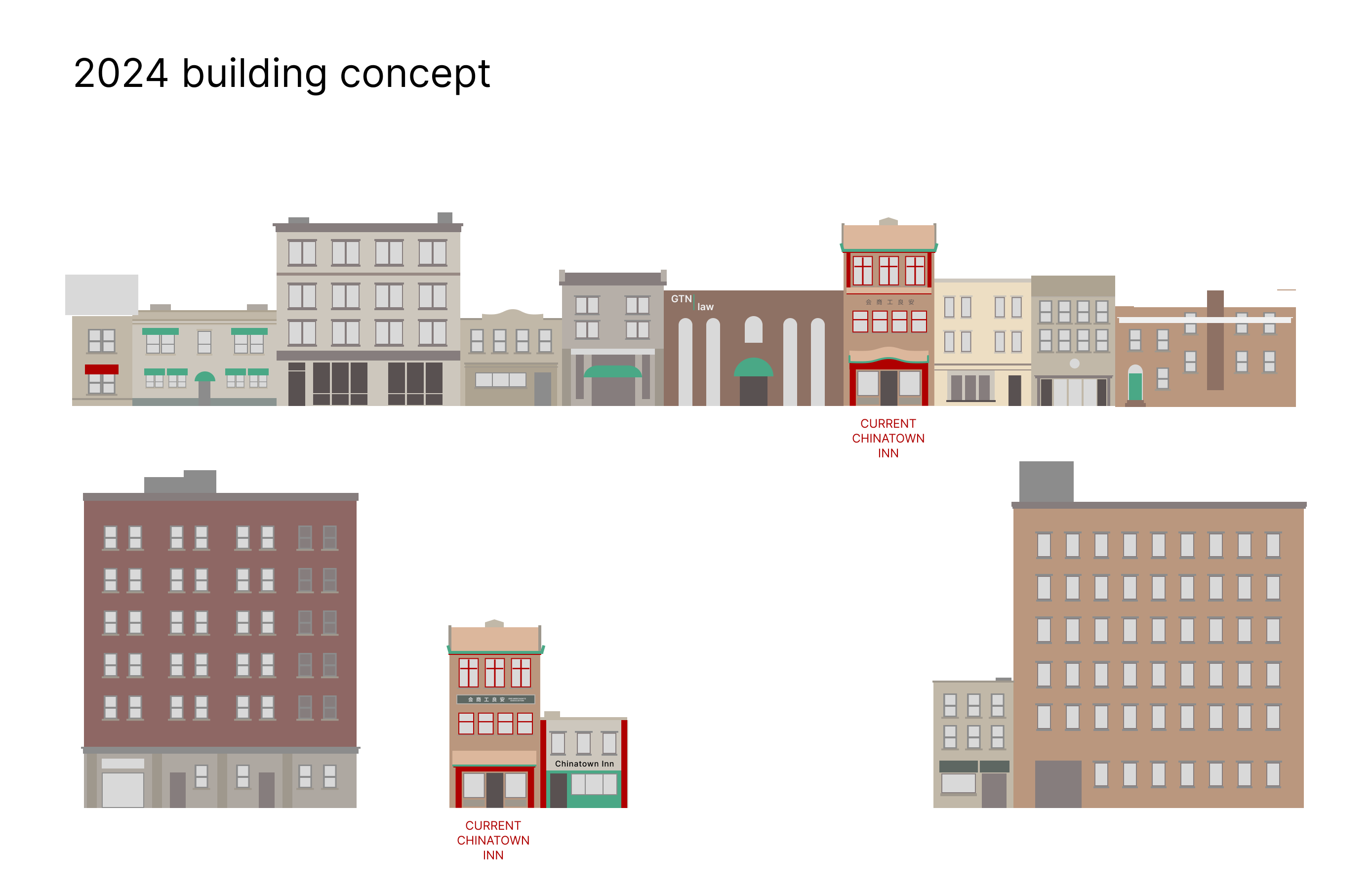
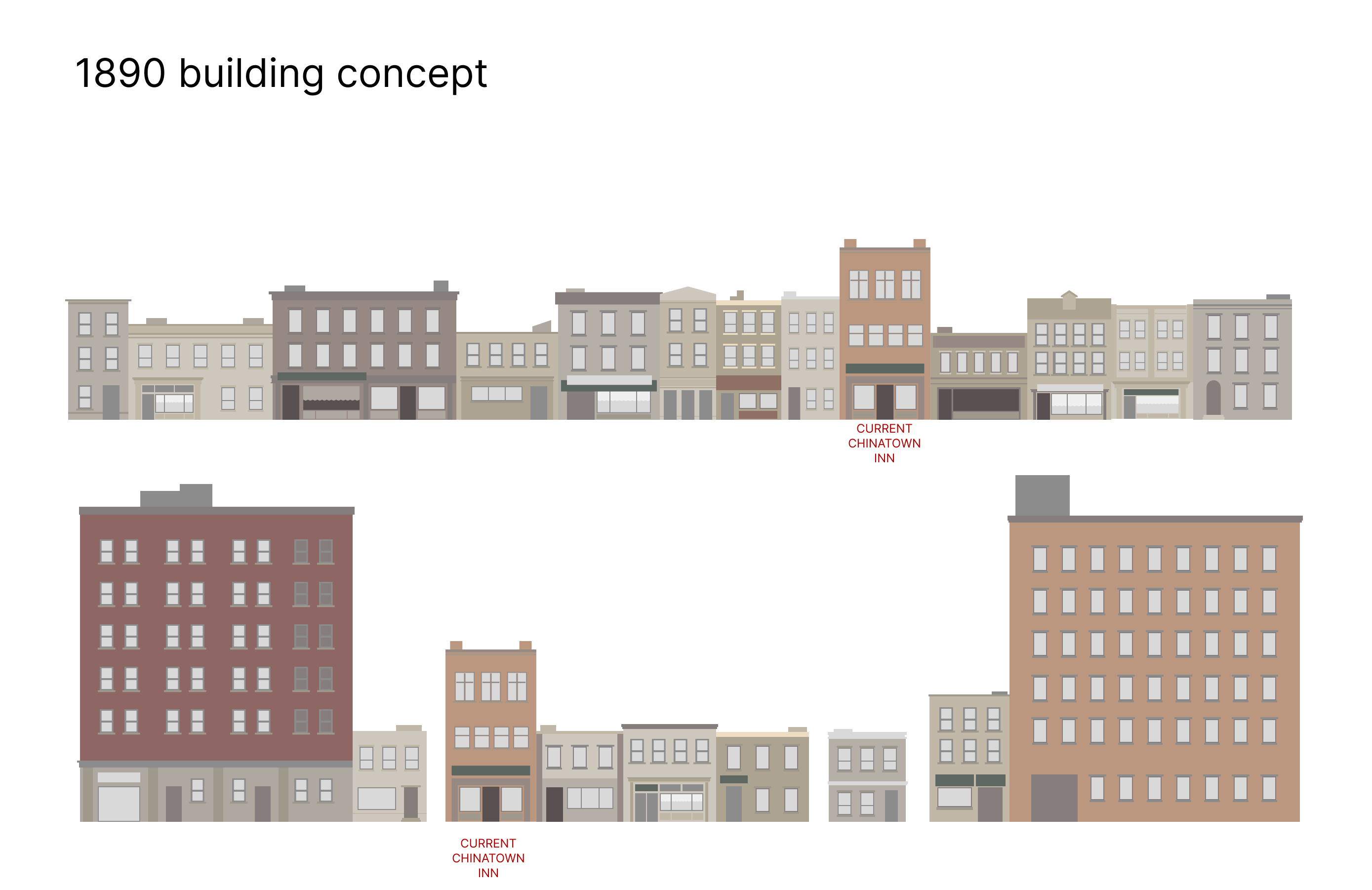
We studied historical documentation at the Heinz History Center to map the real street layout and the shops that filled Chinatown across its different eras — the blueprint for every environment we rebuilt.
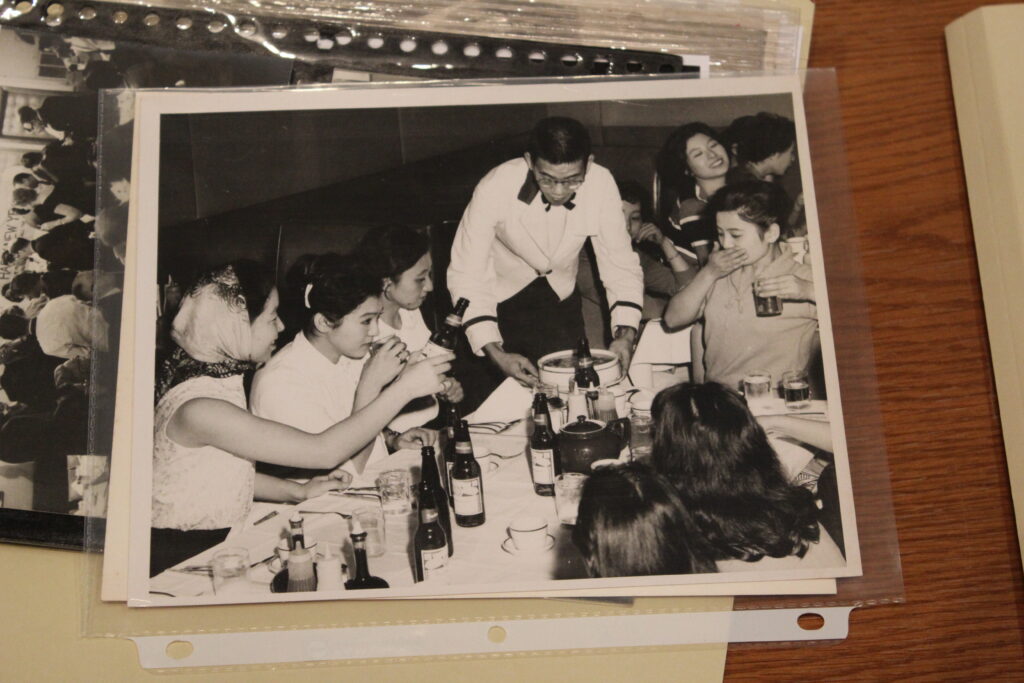
From Shirley Yee's family collection — the primary-source photographs and documents behind our reconstruction.
The takeaway — these sources gave us what fiction can't fake: real people to anchor the story in, and an accurate map of a place we had to rebuild from nothing. They set up the two principles that shaped everything next — emotional anchoring and temporal layering.
Rather than creating a museum-style walkthrough, we designed the experience as an exploration tour with storylines. Users don't just observe — they play a role. They arrive as two brothers, newly immigrated to Pittsburgh's Chinatown in the 1890s, and are given tasks that reveal the neighborhood's history through action.
"We wanted users to feel like they're discovering history, not being lectured about it."
The experience is a two-player co-op story — you and your brother arrive as immigrants and build a life in Chinatown across two interactive chapters, before a final chapter confronts you with the present.
The two brothers support each other to put down roots — renting a home in downtown Pittsburgh, transferring money, and decorating the place together. Players tap each other to start interactions and place the materials they need directly in augmented reality.
Established now, the brothers give back — providing free food to fellow immigrants. The two players communicate to divide the work, grab ingredients, and cook side by side.
The story leaves the past behind. Through sound narration and 2D animation, the final chapter reveals what became of Pittsburgh's Chinatown today — the quiet, deliberate turn the whole experience builds toward.


ARENA is CMU's open-source augmented reality platform that enables browser-based XR experiences without requiring app downloads. This was both our biggest advantage (accessibility) and our biggest constraint (performance limitations).
Because ARENA is a mixed-reality platform, the experience also had to be location-based — every virtual element is pinned to a real-world position. So we physically built and decorated the room to mirror the digital scene, placing props and markers so the AR layer lined up precisely with the space.
A walkthrough of the physical room — built and dressed so every virtual item lands in the right place.
Playtesting ran through every milestone — the client first, then instructors and a subject-matter expert, and finally 21 players in open sessions, with pre- and post-experience surveys measuring each against our goals. Three findings reshaped the design:
Players only collaborated when they already knew each other — strangers stayed quiet and missed the point of a two-player experience.
Added a tutorial that makes both players see each other's avatar before starting — so collaboration is the very first thing they do.
The interface was too obtrusive, and the in-experience text was hard to read.
Shrank the UI, reworded the prompts, and rebuilt the background for legibility.
Players wanted to connect the virtual neighborhood to the real one — "how does this map to the actual Pittsburgh Chinatown?"
Added source citations and descriptive text to the historical photos, and an end video tying them to present-day map imagery.
The result is a polished, two-player experience that premiered at the ETC Festival. Across testing, the surprise wasn't just that people enjoyed it — it was the educational pull: players said they learned about Pittsburgh's Chinatown and wanted to learn more, and parents were caught teaching their kids mid-experience. That's the whole goal — making people care about a neighborhood they'd never heard of — landing in real time.
Full walkthrough — the final two-player experience, start to finish.
This project changed how I think about design as preservation. Technology is often used to create new things — but it can also be used to recover what's been lost. The most powerful design decisions weren't about UI patterns or interaction models. They were about empathy — deciding which stories to tell and how to make people feel them.
Working with ARENA also taught me to design within constraints. Browser-based XR can't compete with native apps on raw performance. But by focusing on storytelling quality over graphical fidelity, we created something that felt more meaningful than many polished VR experiences.